Medicine student Yaël Stroeken wrote about her research in Uganda on the views and roles of husbands and men with the goal of reaching more women for screening:
- A woman without a uterus, is no longer a woman -
After months of preparing for the research and my trip, the time has come; Kagadi will be my new home for 5 months. I am conducting research here as part of my science internship for my medical studies, on men's perceptions about cervical cancer screening and vaccinations. I am proud to contribute on behalf of the Female Cancer Foundation and together with a motivated team in Kagadi to help eliminate cervical cancer from the world.
I can hear you thinking, 'Why research the perceptions of men and not women? '
Much research has been done on women's reasons for coming or not coming to screening, and one of the common reasons is that the husband does not give consent: "My husband does not want me to go." Uganda, like many African countries, is a country where the husband is the head of the family, making decisions for the family members and managing the money. Therefore, with this study we hope to learn more about men's knowledge and perceptions and in this way get more support for women to go to screening and vaccinate their daughters against human papilloma virus (HPV).
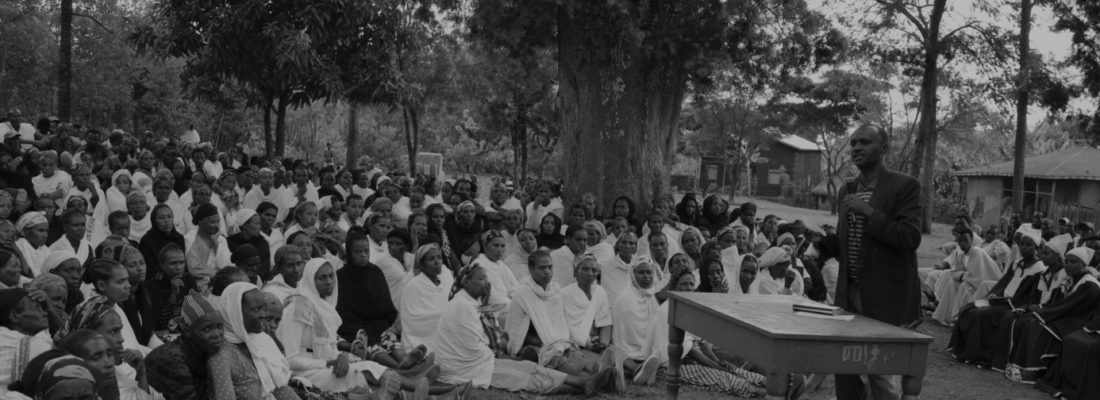
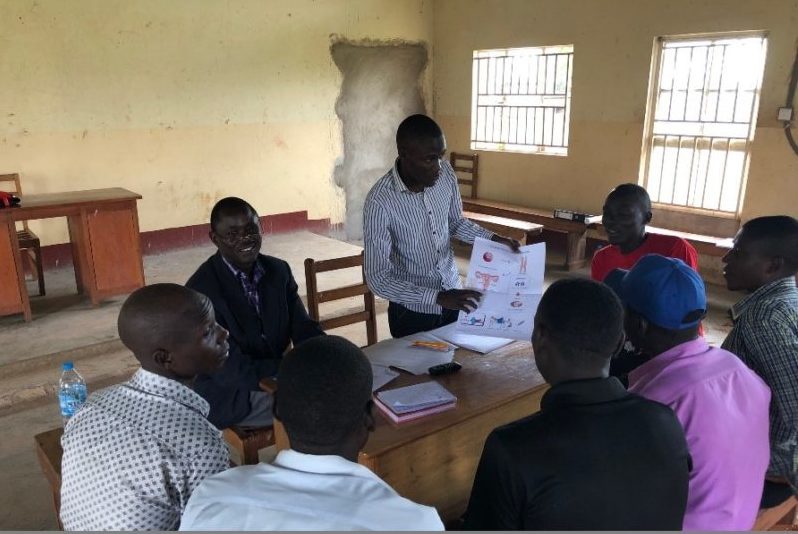
We have now had a number of group discussions in different villages and are already seeing some opportunities to incorporate the "Tell" of the "Tell-See and Treat" project for men as well. The participants are enthusiastic and happy to participate in the study. Everyone shares their experiences and there appear to be many misunderstandings about the origin of the disease.
During the interview, an explanation of the clinical picture and how to screen and treat is given.
In addition, the importance of screening becomes painfully clear in discussions with men.
"I have heard on the radio about cervical cancer screening and I asked my wife if she had ever gone for screening. She said, 'no, but I don't have cervical cancer.' So I asked her: 'How do you know?' And she told me: 'If she had it, she would feel it'. "
"I heard on the radio about cervical cancer and I asked my wife if she had ever been screened. She said, 'no, but I don't have cervical cancer.' So then I asked her, 'How do you know?' And she said, 'If I had it, I would have felt it'."
Cervical cancer is a "silent killer" that causes few symptoms in the early stages and is often not detected until it is already too late. It is therefore vital that we reach as many people as possible and explain why prevention in the form of screening and vaccinations is so important.
Besides the physical symptoms, anxiety and stress that cervical cancer brings, there is also a lot of shame and discrimination regarding this issue. Female fertility is very important in this culture.
"She knows she will lose her family and that is the end of marriage. A man cannot stay with her when she has had her uterus removed because of cancer. A woman without uterus is no longer a woman."
"She knows she will lose her family and that means the end of her marriage. A man cannot stay with his wife if her uterus is removed because of cancer. A woman without a uterus, is no longer a woman."
So there is still much to achieve. With this research, I hope to take a step toward a Uganda where women are supported to go to screening and do not have to suffer through the effects of cervical cancer.
Yaël Stroeken - Student of Medicine, Leiden